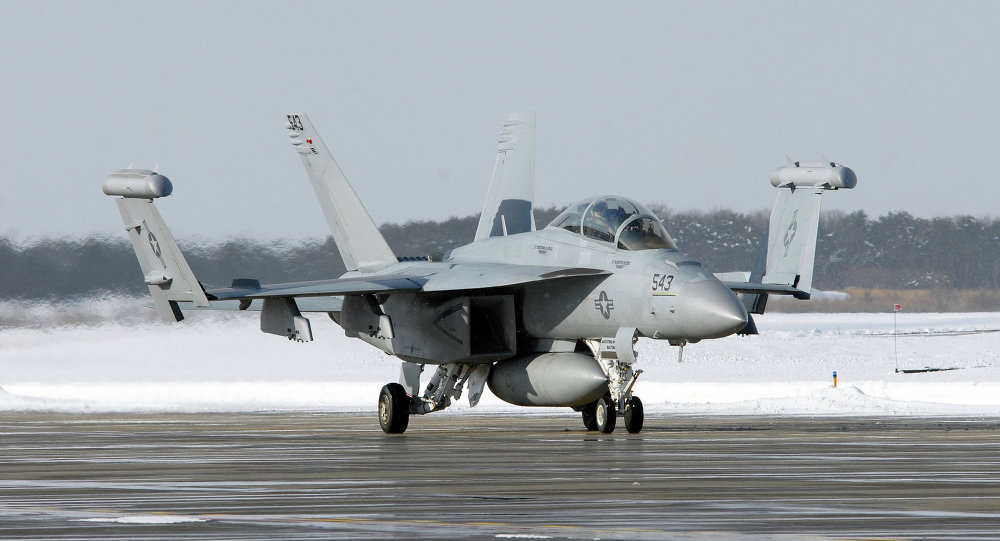
US Preparing Electronic Warfare for 'Force-on-Force Conflict in Europe'
TEHRAN (Basirat)- In August 11, the US Army announced the creation of the Army Rapid Capabilities Office to prevent “capability gaps” that have formed within the American military in recent years.
In August 11, the US Army announced the creation of the Army Rapid Capabilities Office to prevent "capability gaps” that have formed within the American military in recent years.
"Our adversaries are modernizing at a rapid rate, and in some cases, our capabilities are inadequate to keep up, to maintain our edge,” Maj. Gen. Walter E. Piatt, who is in charge of the operations in the new office said in a statement. "We need to … make sure that they are offset from us, not the other way around.”
Doug Wiltsie, a director of the Rapid Capabilities Office, at the time said that it will focus on "urgent, immediate or emerging threats” defined by the commanders on the ground. Army Secretary Eric Fanning obscurely remarked that the new establishment will work on new capabilities development rather than on creating new equipment.
According to Defense One citing a military analyst, many military
authorities have been shocked by the pace of innovations in electronic
warfare showcased in Russia’s Syrian campaign, which saw the use of "new
waveforms that can disrupt an adversary’s electronics and paint enemy
stealth aircraft.”
According to Fanning, "the combination of unmanned aerial systems and offensive cyber and advanced electronic warfare capabilities … provided Russian forces a new degree of sophistication.”
According to Fanning, "the combination of unmanned aerial systems and offensive cyber and advanced electronic warfare capabilities … provided Russian forces a new degree of sophistication.”
On Wednesday, he said that the new office will be accelerating
development of cyber, electronic warfare, and position-and-timing gear.
Army Rapid Capabilities Office will use "targeted investments to execute strategic prototyping, concept evaluation and limited equipping — especially in areas where technology progresses rapidly,” Katrina McFarland, the Army acquisition executive said.
Steven Pifer, a former U.S. ambassador to Ukraine, observed that
the establishment of such an office would mean that the US has shifted
its focus from the Middle East, where it has participated in a row of
conflicts, to Europe.
Army Rapid Capabilities Office will use "targeted investments to execute strategic prototyping, concept evaluation and limited equipping — especially in areas where technology progresses rapidly,” Katrina McFarland, the Army acquisition executive said.
"My guess is … that after 15 years of doing largely counter-insurgency operations in the Middle East, the Army is now taking a look at how it would do large force-on-force conflict in a place like Europe,” he said.