Japan to join US in South China Sea patrols
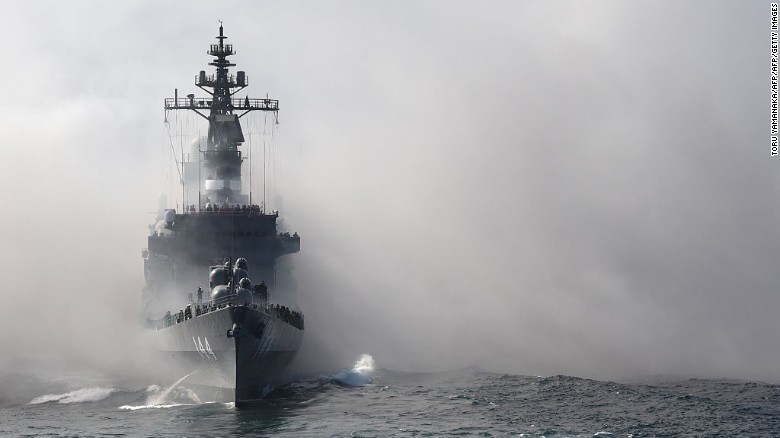
TEHRAN (Basirat)- Japan is planning on upping its activities in the South China Sea through joint training patrols with the United States and exercises with regional navies, Japanese Defense Minister Tomomi Inada said.
Japan is planning on upping its activities in the South China Sea through joint training patrols with the United States and exercises with regional navies, Japanese Defense Minister Tomomi Inada said.
Japan would also be giving military aid to countries such as the Philippines and Vietnam as it increases its role in the contested waters of the South China Sea, Inada said Thursday at the Center for Strategic and International Studies, a think tank in Washington, DC,
Inada also welcomed the US's plan to allocate 60% of its Navy and Air Force assets to the Asia Pacific region by 2020.
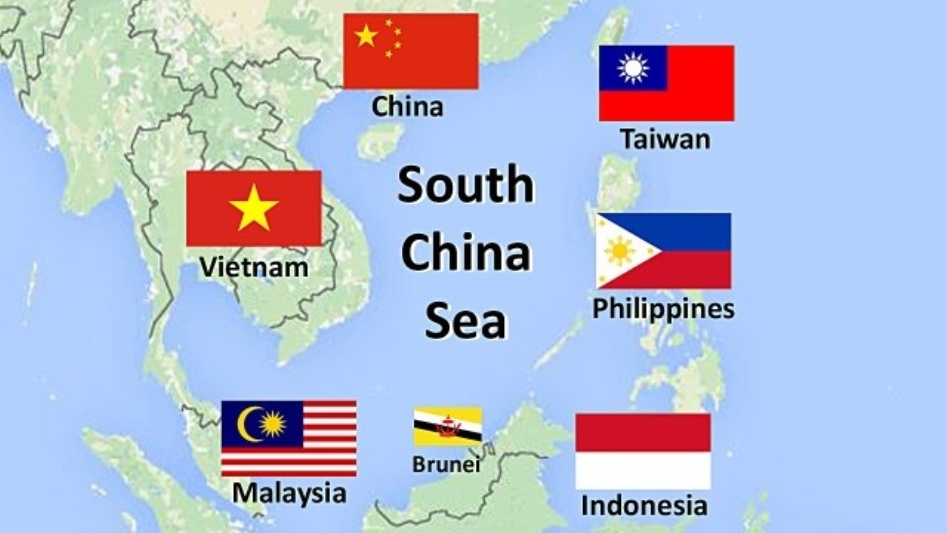
Japan, Vietnam, Malaysia, Brunei, the
Philippines and Taiwan are among a group of nations engaged in
territorial disputes with China.
China says it owns the bulk of the South China Sea, pointing to a 1947 map to justify claiming territory that lies hundreds of miles to the south and east of its island province, Hainan.
The ongoing disputes have intensified as countries in the region build up their military defenses against China, and with Vietnamese fishermen who operate in the Paracel Islands -- territory claimed by Vietnam, China and Taiwan -- caught up in the fray.
In July 2016, an international tribunal in the Hague ruled in favor of the Philippines in a maritime dispute by concluding that China had no legal basis to claim historic rights to expansive territories in the South China Sea.
Inada mentioned how China's recent activities in the East China and South China seas were "raising serious concern in the Asia-Pacific and beyond."
"I would like to underline my government's resolve to protect our territorial integrity and sovereignty," said Inada.
"To this end, we will continue our own defense efforts and also maintain and enhance the Japan-U.S. alliance."
Japan's role
Nancy
Snow, a professor of public diplomacy at Kyoto University told CNN that
under Prime Minister Shinzo Abe, Japan has made it "crystal clear" that
its Self Defense Forces will be "more interventionist" and closely
aligned with the US.
"Right now, it has a lot to do with Japan flexing its muscles and being under the thumb of the US military, which can't operate on its own in the South China Sea," Snow told CNN.
Snow explained that currently China was in competition with the US and would not back away from its claims over the South China Sea.
But Snow warned that Japan had much to lose from strengthening its military presence in the world.
"Japan has a 71-year-old history of being a peace brand, but there are plenty of people who would say that it's time for an update, but if so, why aren't the public on board?" asked Snow. "Japan's strength has come through trade and culture, not through having a high military profile."
Some, however, view Japan's increased investment in its military might as a defense mechanism for "serious security threats" in the region. Inada referenced North Korea's desire to continue its nuclear missile tests, while in March 2015, then vice defense minister Kenji Harada told the Washington Times that Japan was building up its military to defend against the threats posed by China.
In recent months, tensions have risen in
the South China Sea as the US has increased its presence there. In May
2016, the US Navy sent a guided missile destroyer
within 12 miles of a disputed island in the South China Sea, prompting
China to dispatch fighter jets and warships to "expel" the American
ship.
On Wednesday, Chinese and Russian naval ships began joint exercises in the South China Sea, adding a new twist to the ongoing tensions.