Why the Karabakh conflict not settled yet?
TEHRAN (Basirat)- the Karabakh crisis has no military solution and that will not yield the desired results. Both warring factions should back down on their excessive demands
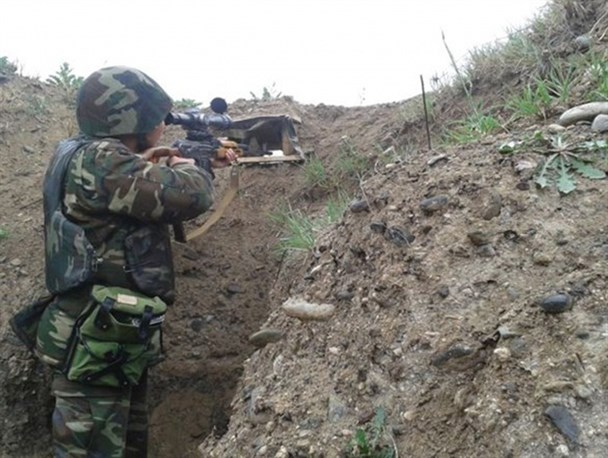 the Karabakh crisis has no military solution and that will not yield the desired results. Both warring factions should back down on their excessive demands.
 By Dr. Shoaib Bahman
The Karabakh conflict is once again under the world media spotlight while the roots and causes of the crisis are mainly addressed in the media and the solution to it and the reasons behind its continuation are less discussed. The reality is that the continuation of the Karabakh clashes and failure to find an appropriate solution to it have different reasons which will be studied here at the three levels of domestic, regional and international.
At the domestic level, part of the failure to the dispute resolution goes back to the two countries involved in the crisis because each of them is ready to settle the conflict only if it leads to an all-out win for them. Given to the fact that an all-out win is not usually achieved through a mediation process, the warring parties do not accept and have no willing for an international intermediary for the conflict settlement. In addition, both the Azerbaijani and Armenian governments use the Karabakh conflict in order to have a continued existence and also implement their policies.
For instance, the Karabakh dispute is turned into an excuse for Ilham Aliyev to push with his government in a way he, using this dispute as a justification, managed to change Azerbaijan’s Constitution and reelected as the president. The Azerbaijani government has also used the conflict as a means to put pressure on the opposition and Islamists and crack down on them.
In Armenia, the situation is pretty much the same and the country’s different governments have used the Karabakh conflict to justify their policies through the history. However, it seems that Azerbaijan is exercising more self-restraint in the current crisis as its Defense Ministry, two days after the start of the conflict on April 2, announced a unilateral ceasefire. The spokesman of Armenia’s Defense Ministry, nevertheless, described the truce as unreal and labelled it "information trap”.
There are also some challenges at the regional level because the most important players in the region have their challenges and each take their own stance on the conflict. For example, Turkey can never act as an intermediary between the two countries as it fully supports Baku and has no political relations with Yerevan. Here, Iran is considered as the best country which can serve as a go-between, but the US and its allies are not that willing to accept Iran’s active role in the region.
At the international level, players like Russia, US, and European countries are present and their interests are in the continuation of the Karabakh conflict and are not seeking an end to it. Russia sees this dispute in the region as an opportunity to push ahead with its traditional infiltration. The US also exploits this situation in different ways from forging close relations with Azerbaijan and Armenia to mounting pressure on Moscow by instigating ethnic and sectarian crises adjacent to Russia’s borders in an attempt to dissuade it from seriously confronting the Daesh and al-Nusra Front terrorists in Syria as well as returns it to fight within its borders.
Additionally, the Europeans have no interest in playing an active role to resolve the issue until it is reached their borders. This is because from one side they look at Azerbaijan as a source to guarantee part of their energy, and from the other consider the Christian Armenia as their natural ally in the Caucasus.
Although there is no short-term and long-term outlook to settle the Karabakh crisis considering the above-mentioned challenges, but it should be remembered that numerous attempts have been made during the past years to solve it and all of them were abortive. But the following facts need to be taken into account:
Firstly, the Karabakh crisis has no military solution and that will not yield the desired results. Both warring factions should back down on their excessive demands.
Secondly, fanning the flames of this ethnic and sectarian crisis is not at all in the interest of the regional countries.
Lastly, the best way to settle the Karabakh dispute is through regional cooperation and that it should not be turned into an international crisis. Therefore, the Islamic Republic of Iran, given the fact that it has close relations with both sides, can play an effective role here. A recent summit which was held in the Iranian northern city of Ramsar with the participation of the foreign ministers of Iran, Turkey and Azerbaijan is an indication of Iran’s willingness to solve this issue in the framework of good neighbor policy.