Washington's Two Strategies in Syria Canceling Each Other Out
TEHRAN (Basirat)- The United States has pursued two strategies to resolve the Syrian crisis – one led by the CIA, the other devised by the Pentagon, but instead of reinforcing each other they are getting in each other's way, with Turkey's military operation in northern Syria serving as tangible evidence of this trend.
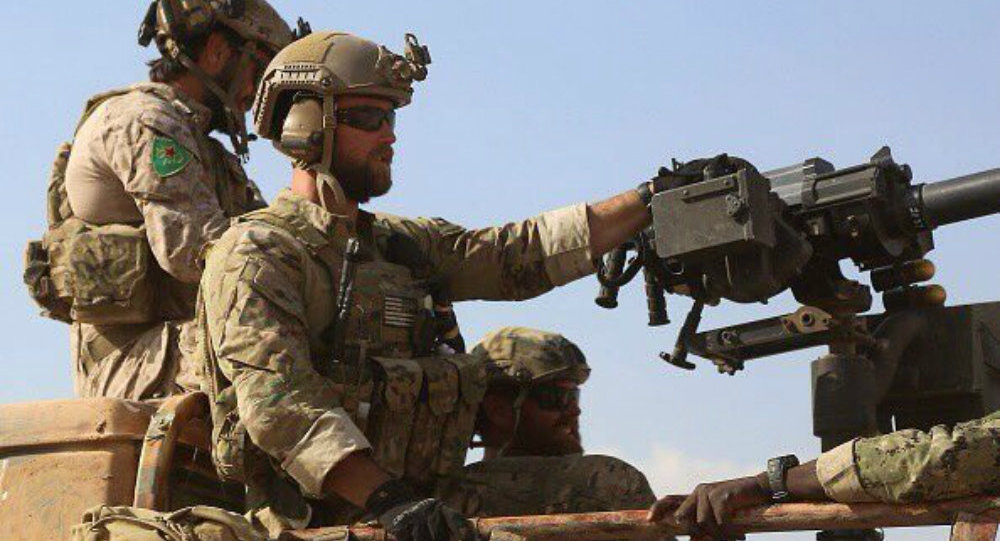
The United States has pursued two strategies to resolve the Syrian crisis – one led by the CIA, the other devised by the Pentagon, but instead of reinforcing each other they are getting in each other's way, with Turkey's military operation in northern Syria serving as tangible evidence of this trend.
Ankara launched its offensive, dubbed Operation Euphrates Shield, on August 24 to ostensibly push Daesh out of the border town of Jarablus and the surrounding areas. The Free Syrian Army backed by Turkish warplanes, tanks, artillery and special forces seized the town largely without any resistance from Daesh. The Turkish troops and the rebels then started fighting US-backed Kurdish militias in areas that have already been liberated from the terrorist group by the Syrian Democratic Forces (SDF).
Both Turkey and the SDF, largely made up of fighters from People's Protection Units (YPG), are key US allies in the region.
"The origins of the conflict lie in the fact that the United States has two policies in Syria. Initially the US policy was designed to support the opposition to the Assad regime," Jerusalem-based journalist Seth J. Frantzman wrote for the National Interest.
"The origins of the conflict lie in the fact that the United States has two policies in Syria. Initially the US policy was designed to support the opposition to the Assad regime," Jerusalem-based journalist Seth J. Frantzman wrote for the National Interest.
As part of these efforts, the US was vetting rebel armed groups
that could prop up the so-called moderate opposition. Both the CIA and
the Pentagon were involved in this process.
The Pentagon's $500 program was meant to produce approximately
5,000 fighters. The initiative ended in a major embarrassment for the US
Department of Defense (DoD) when General Lloyd Austin, commander of US
Central Command, told the Senate Armed Services Committee that only
"four or five" US-trained rebels were fighting against Daesh.
According to Frantzman, the rise of Daesh prompted Washington to shift its focus from trying to depose Assad to counterterrorism.
According to Frantzman, the rise of Daesh prompted Washington to shift its focus from trying to depose Assad to counterterrorism.
By late 2015, "Defense Department, CIA and State Department
policies began to diverge, and the Defense Department began to see the
Kurdish YPG and its effective fight against [Daesh] as the best partner
for the anti-[Daesh] coalition forces," he said.
Turkey was not happy with this plan. As Kurdish forces moved
further west and closer to the Euphrates, Ankara became increasingly
insistent that the river was a red line that the Kurds were not allowed
to cross. High-ranking Turkish officials have repeatedly said that if
the Kurds decide to move further west, the Turkish military would launch
a ground operation to stop them.
This is exactly what happened.
On August 12, the SDF took control of Manbij, a city located west of the Euphrates, in an operation that was conducted in close cooperation with the Pentagon. Three days later the Kurdish forces said that the Daesh-held town of al-Bab, situated further to the west, was their next target, adding that the Manbij offensive would continue until the militants are pushed out of surrounding areas.
On August 12, the SDF took control of Manbij, a city located west of the Euphrates, in an operation that was conducted in close cooperation with the Pentagon. Three days later the Kurdish forces said that the Daesh-held town of al-Bab, situated further to the west, was their next target, adding that the Manbij offensive would continue until the militants are pushed out of surrounding areas.
Two weeks later Ankara sent its Armed Forces to northern Syria.
On August 24, several hours after Operation Euphrates Shield was
launched, US Vice President Joe Biden sent a strong message to the
Kurds, saying that they must move back east of the Euphrates. Two days
later John Kerry downplayed US support for the Kurds saying that there
"has been some limited engagement with a component of Kurd fighters on a
limited basis."
Washington's response to Turkey's incursion undoubtedly upset many Kurdish fighters since they, not Ankara, were instrumental in the US-led anti-Daesh efforts in northern Syria.
Washington's response to Turkey's incursion undoubtedly upset many Kurdish fighters since they, not Ankara, were instrumental in the US-led anti-Daesh efforts in northern Syria.
"There is ample evidence that the DoD has been in competition with
the CIA to find viable partners and that the DoD has been more
successful in its relationship with the Kurds and SDF, who are far more
effective than the plethora of Syrian rebel groups."
Moreover, the clashes between the Turkish military and the YPG appear to be pointing to Ankara's true goals in this region.
Moreover, the clashes between the Turkish military and the YPG appear to be pointing to Ankara's true goals in this region.
"The risk the United States faces is alienating the Kurds and
seeing the SDF salient in Manbij collapse. This will set back US plans
to launch a strike on Raqqa and cut off the head of the [Daesh] snake,"
Frantzman observed.